Sleep comfort · Setup guide
Adjustable Bases: A Practical Guide to Positions, Setup, and Sleep Comfort
An adjustable bed is not a single posture delivered at the touch of a button. It is a small range of choices: head raised a little for reading, legs lifted to ease into rest, or the surface flattened again for sleep. Getting comfortable depends on how those positions fit your body, mattress, pillows, bedding, and room—not simply on how many settings a base offers.
For years, the bed was understood as a fixed landscape: mattress, sheets, pillow, lights out. Adjustable bases change that arrangement. Their moving sections allow a sleeper to raise the head, lift the legs, or combine both movements, creating different configurations for different parts of the evening. The appeal is practical as much as technological. Reading, watching a program, resting after a long day, and settling into sleep may each call for a slightly different position.
That flexibility can be useful, but it is not a guarantee of better sleep. Comfort is personal, and a dramatic incline is not automatically more supportive than a modest one. The most successful setup is often the least theatrical: a few careful adjustments, a mattress that can move with the base, pillows that keep the neck comfortable, and enough clear space for everything to operate safely.
This guide explains how to approach adjustable bed positions, what to check before installation, how to think about bedding compatibility, and how to make everyday adjustments feel natural. The aim is not to find a perfect preset for everyone. It is to help you make a sleep surface work in a way that suits your habits and your room.
What an adjustable base actually changes
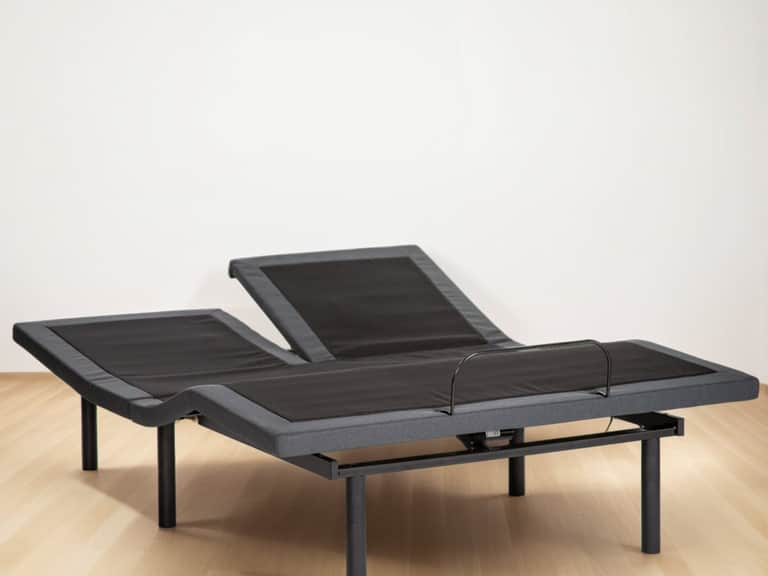
An adjustable base supports a mattress on a platform that can move at the head and, depending on the model, at the foot. Raising the head changes the angle of the upper body; lifting the foot section changes the position of the legs. Some bases allow those sections to move independently, while others combine them in preset configurations. A wireless remote may include named positions, such as a flat setting or a lounge-style position, and sometimes offers a way to save a preferred arrangement.
The important distinction is between a position and a result. A preset is a convenient starting point, not a promise that the position will suit every body, mattress, pillow, or activity. Two people can select the same setting and experience it differently. Even one person may prefer a different angle for reading than for falling asleep. Give yourself permission to adjust by small increments rather than assuming that the remote’s labels are instructions.
Movement also changes how the bed behaves as a whole. When the head or foot rises, the mattress bends along the base’s moving sections. Bedding shifts, pillows may slide, and the distance between your body and the headboard can change. These are normal practical considerations, not signs that the setup is necessarily wrong. They are reasons to test the complete arrangement instead of judging the base in isolation.
Positions for reading, resting, and sleeping
A raised-head position can make reading or watching a screen feel more relaxed than stacking several pillows against a flat mattress. Start with a low incline, then raise the head section until your shoulders and upper body feel supported. The goal is to avoid the sensation that you are folding sharply at the waist or being pushed forward. If you need to brace yourself with your arms or keep readjusting to stay in place, try a lower angle.
For ordinary rest, a slight elevation may feel more comfortable than a pronounced sitting position. The right angle is subjective: some people like the torso lifted, while others feel most settled close to flat. Treat the remote as a fine-adjustment tool. A small movement may be enough to improve the way your body meets the mattress, and more incline is not necessarily more comfort.
For sleep, begin with the position in which you naturally feel most at ease. Many people use a flat configuration as their baseline, then make modest changes if they prefer a different angle. If you wake during the night, pause before repeatedly changing the base. Notice whether the issue is the angle, the pillow, the bedding, the room temperature, or simply a normal change in sleeping position. A short period of observation can be more useful than cycling through every preset.
Some remotes offer a combined head-and-foot position or a named preset. These can be helpful for exploration, but the name does not establish a medical benefit or make the setting right for everyone. If you are considering an adjustable position to address a health concern, ask a qualified healthcare professional for guidance. A bed base is a comfort tool, not a substitute for diagnosis or treatment.
Pillow height changes as the bed moves
Pillows are easy to overlook when testing an adjustable bed. On a flat surface, a pillow’s loft—the height it gives your head—may feel familiar. Raise the head section, however, and your upper body changes angle. The pillow can then feel too thick, too thin, or as though it is pushing the chin toward the chest. This is one reason a comfortable position in a showroom or during a quick trial may feel different during a full evening at home.
Test the pillow and base together. Lie back, let your shoulders settle, and notice whether your head feels comfortably supported rather than tipped forward or drawn backward. If the pillow seems to shift, check whether its shape or cover is slipping over the mattress. A different pillow height may help, but change one thing at a time so you can tell what made a difference.
Sleeping position matters as well. Side sleepers often need enough pillow height to fill the space between the shoulder and head, while back sleepers may prefer a lower profile. Stomach sleeping usually calls for less height, though individual needs vary. These are starting points, not rigid rules. The practical test is whether the arrangement feels stable and comfortable without creating an obvious bend or strain in the neck.
Extra pillows can be useful while reading, but they may not be the best solution for overnight sleep. A large stack can shift when the bed moves and make it harder to maintain a settled position. If you rely on several pillows to feel supported, experiment with the base angle first, then use only the additional cushioning that remains comfortable when you recline.
Mattress and bedding compatibility: the first checks
Before buying or installing a base, confirm that the mattress is designed to work on an adjustable surface. Not every mattress construction bends in the same way, and not every manufacturer permits use with every type of base. Check the mattress documentation and the base instructions rather than relying on appearance or general assumptions. If the information is unclear, contact the manufacturer or retailer before proceeding.
Also check that the mattress dimensions match the base. Width and length should correspond to the intended size, and split configurations require particular care. In a split setup, each side may move separately, so confirm that the mattress arrangement, sheets, and accessories are suitable for the system. A mismatch can affect fit, movement, and everyday convenience.
Fitted sheets are another part of the equation. A sheet that is too tight may pull at the corners as the base bends; one that is too loose may wrinkle or shift. Look for a secure fit that accommodates the mattress depth, and test the bed through its normal range of movement. Flat sheets, blankets, and comforters should have enough room to move without becoming tangled or dragging against the floor.
Mattress pads and toppers can influence how smoothly the layers move together. Check that any accessory is secured as intended and does not bunch when the head or foot is raised. A topper with straps, for example, may stay in place differently from a loose layer. The Vispring Opulence Mattress Topper is described as having eight straps to hold it securely; as with any topper, confirm that its construction and the mattress manufacturer’s guidance are compatible with your adjustable setup before use. A secure fit is more important than adding layers for their own sake.
A measured approach to everyday adjustment
When the base is new, resist the urge to explore every setting at once. Begin flat. Test the head section by raising it gradually, then return to flat and test the foot section. Finally, try a combined position if the base supports one. Moving one section at a time helps you understand what each change does and makes it easier to return to a comfortable baseline.
- For reading: Raise the head section in small steps and keep your shoulders supported. Use a pillow that does not force your head forward.
- For winding down: Try a gentle incline or a familiar lounge position, then reduce the angle if you feel pressure or sliding.
- For sleep: Start from your most comfortable position, often flat or only slightly raised, and avoid treating a preset as a requirement.
- For returning to flat: Use the remote deliberately and check that blankets and pillows have not caught or shifted.
Controls should be easy to reach from the bed without putting the remote somewhere it can fall into a gap. Learn which buttons raise or lower each section and how to stop movement. If the remote includes memory settings, save a position only after you have tested it and know you can return to it comfortably. Some models also include a child-lock function; consult the manual to understand how it works and when to use it.
Features such as massage functions, lighting, or charging ports may add convenience, but they are separate from the basic question of fit. Explore optional features after you have established a comfortable position and confirmed that the bed moves properly. The Clean Bedroom Level 2 Adjustable Bed Base, for example, is described as offering independent head and foot lift, preset and customizable positions, dual USB ports, underbed lighting, and massage settings. Its product details also list adjustable leg heights and compatibility with platform and pedestal frames. Review the specific dimensions and installation instructions before deciding whether it suits your mattress, frame, and room.
Room layout, clearance, and controls
An adjustable base needs room to move. Before setup, measure the bed space and consider the path from the bed to walls, bedside tables, storage, and power outlets. Check the base instructions for clearance requirements. A nightstand placed close to the frame may interfere with movement, while a cable routed under a moving section can be pinched or pulled. Keep cords clear of hinges and mechanisms.
Headboards and bed frames deserve a careful look. Some bases sit inside or alongside existing frames; others require different support. The fact that a frame appears sturdy does not prove it is suitable. Confirm compatibility, support requirements, and permitted leg or platform arrangements with the relevant documentation. If the setup uses adjustable-height legs, choose a height that leaves the bed stable and preserves enough clearance for the mechanism.
Plan where the remote will live and make sure its controls remain accessible from the sleeping position. Charging cables should not cross the area where a person gets in and out of bed. If the base includes underbed lighting, check that it does not create glare or disrupt the quiet, dark environment you prefer for sleep. The practical details are modest, but they often determine whether a feature feels useful night after night.
How to tell whether the fit is working
After setup, test the bed with the mattress, sheets, pillows, and usual blanket in place. Move the base through the positions you expect to use, then return it to flat. Look for bedding that pulls tight, pillows that slide, or layers that bunch at the moving sections. Listen for unfamiliar noises and watch for anything touching the wall or furniture. If something seems obstructed or unstable, stop and consult the manual rather than forcing the mechanism.
During the first week, notice how the arrangement feels across ordinary routines. Is it easy to find a reading position? Does the pillow stay comfortable when the head is raised? Do sheets remain in place? Can you reach the controls without stretching? These questions are more useful than trying to assign a score to every preset. If a position is uncomfortable, return to flat and make a smaller adjustment next time.
It can help to keep a brief note of changes. Record the position you tried, whether you changed the pillow, and what felt better or worse. This is not a sleep diagnosis; it is a simple way to avoid repeating experiments that did not help. If discomfort is persistent, severe, or associated with a health concern, speak with a qualified professional rather than relying on adjustments alone.
Care and periodic checks
Like other pieces of bedroom equipment, an adjustable base benefits from occasional inspection. Follow the manufacturer’s maintenance instructions, and check that cables remain routed safely, the frame is stable, and bedding has not become caught around moving parts. If the base changes position unexpectedly, stops responding, or develops a new sound, consult the manual or manufacturer for troubleshooting. Avoid attempting repairs that the instructions do not authorize.
Review the fit after changing a mattress, topper, bed frame, or room layout. A setup that worked with one mattress may behave differently with another, and moving furniture can affect clearance. Recheck that the base is level and supported as specified, the mattress is compatible, and the controls are still easy to use. Small maintenance habits protect both convenience and confidence in everyday operation.
The useful position is the one you can live with
Adjustable beds invite experimentation, but comfort rarely arrives through complexity. It is more often the result of a suitable mattress, a pillow that works at the chosen angle, bedding that moves freely, and a position that feels natural rather than extreme. A base can make the bed more adaptable to reading, resting, and changing routines; it cannot make every posture right for every sleeper.
Start with compatibility, make small adjustments, and assess the whole sleep surface rather than the mechanism alone. Keep the room clear, learn the controls, and pay attention to the way pillow height and bedding shift as the bed moves. With those basics in place, an adjustable base becomes less a gadget to master than a practical part of a more flexible bedroom.