Bedding · Fabric guide
Silk Sheets in Everyday Use: Temperature, Care, and Fabric Trade-Offs
Silk has a way of making a bed feel like a different proposition: smooth to the touch, light in the hand, and quietly distinctive. But the question is not whether silk feels luxurious on a showroom shelf. It is whether it suits the hours, temperatures, laundry habits, and small practical demands of ordinary life.
Sheets sit close to the body for a substantial part of the day, yet choosing them can feel like a decision about appearance alone. Fiber, weave, weight, room temperature, sleepwear, and the other layers on the bed all affect how a sheet feels overnight. Silk is often described as cool in summer and warm in winter, a tidy promise that can obscure a more useful truth: fabric influences comfort, but cannot dictate it.
For some sleepers, silk’s smooth, fluid surface is its principal appeal. Others may prefer the familiar grip of cotton, the airy texture of linen, or the straightforward upkeep of a washable blend. Silk also asks for a little more attention when it is cleaned and handled. The right choice depends less on an abstract ranking of fabrics than on what a sleeper notices—and what they are prepared to care for.
This guide looks at silk sheets in everyday use: how temperature comfort works, what distinguishes silk from common alternatives, and what delicate care means in practice. The aim is not to make silk sound indispensable. It is to make the trade-offs plain enough for a considered choice.
What silk feels like against the skin
Silk is a natural protein fiber made by silkworms. As a sheet, it is often valued for its smooth surface and soft drape. A hand passed across it meets less of the textured resistance that can be noticeable in linen or some cotton weaves. That sleekness can feel especially appealing to people who dislike rough or crisp bedding, though preferences are personal: a fabric one sleeper calls fluid, another may find slippery.
The word “silk” does not, by itself, tell you how a particular sheet will feel. Fiber quality, yarn, weave, finishing, and fabric weight all contribute. A lighter silk may feel more delicate and airy; a denser construction may have a more substantial hand. The momme figure, used to describe silk fabric weight, can help compare products, but it should not be treated as a direct measure of comfort or durability on its own. Construction and care matter too.
Mulberry silk is a commonly used type of silk, and product descriptions may identify it as long-strand or pure mulberry silk. Those terms describe material and production characteristics, not a guarantee that every sleeper will prefer the result. When considering a set, look for clear information about fiber content, fabric weight, sheet dimensions, pocket depth for fitted sheets, and washing instructions. Details are more useful than broad claims about luxury.
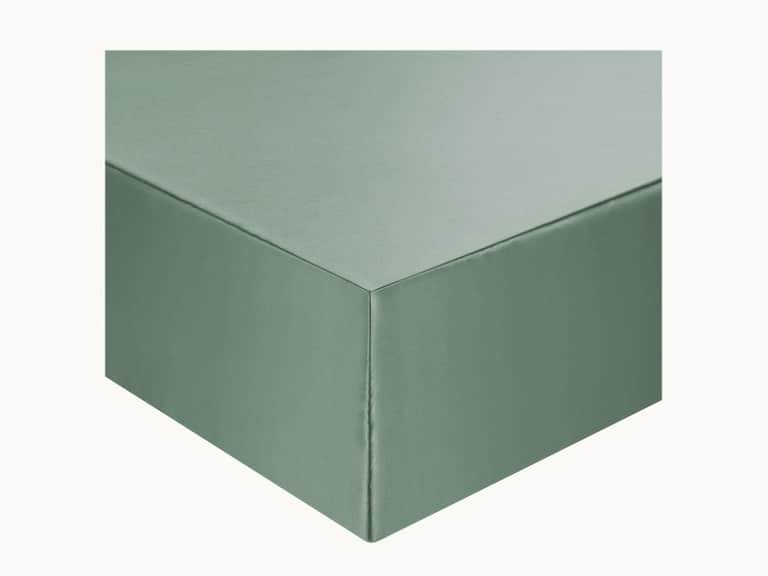
One example is the Ashdown Silk Fitted Sheet, described as 100% mulberry silk with a 22-momme weight and a 15-inch pocket depth. Its care directions specify a delicate wash at no more than 30°C, air drying, and cool ironing. Those particulars help a reader assess fit and upkeep before deciding whether silk belongs in a regular rotation.
Temperature comfort is a whole-bed question
Silk is frequently associated with temperature regulation, but that phrase can sound more absolute than it is. A sheet does not set a sleeper’s temperature independently. Comfort emerges from the interaction of the person, the room, sleepwear, mattress, duvet or blanket, and the textile next to the skin. Someone who sleeps warm under a heavy duvet may still feel too hot in silk; someone in a cool room may find a light silk sheet pleasant when paired with suitable layers.
Silk’s relatively light, smooth feel can make it attractive to sleepers who want less of a heavy or fuzzy sensation. It can also be used as one layer in a bedding arrangement, with blankets added or removed as conditions change. But a sheet is only one component. If overheating is a recurring problem, it may be worth looking at the full arrangement: room ventilation, duvet warmth, sleepwear, and the amount of bedding in use.
Moisture is another part of perceived comfort. Silk is less absorbent than cotton, according to product information for some silk bedding, and that may affect how the fabric feels for people who notice dampness during the night. Less absorbency should not be mistaken for a universal cooling advantage. Individual experiences differ, and the type of weave and the surrounding layers can change the impression. People who strongly prefer a fabric that readily takes up moisture may find cotton or linen more satisfying.
Room conditions matter, too. A bedroom that is warm, humid, or poorly ventilated can make almost any bedding feel less comfortable. In colder conditions, extra layers may be more important than the sheet fiber. The most reliable approach is to think in terms of adaptable layers rather than expecting one material to perform the same way in every season.
For Southampton residents, as for anyone else, local weather is only part of the equation. Indoor heating, insulation, window position, and personal routines can create a bedroom climate quite different from the one outside. A person who opens windows at night may need a different layering plan from someone who keeps a room closed and heated. Silk may be part of either setup; it is not a substitute for adjusting the room or bedding to suit the sleeper.
Silk compared with cotton, linen, and blends
Fabric comparisons are most useful when they describe differences rather than declare a winner. Cotton, linen, and silk each bring a distinct combination of texture, maintenance, and everyday feel. Even within one fiber category, weave and finishing can make two sheets behave quite differently.
Cotton: familiar and practical
Cotton is widely used for sheets and comes in many weaves, from crisp percale to smoother sateen. It is familiar to most households and is often straightforward to launder, although the care label still matters. Cotton tends to have a more substantial, grippy feel than silk, depending on its construction. For people who want a sheet that can handle routine washing without special handling, cotton may be the easier default. It may not provide silk’s distinctive glide, but it offers a broad range of textures and price points.
Linen: textured and relaxed
Linen is often chosen for its visible texture and relaxed appearance. It can feel notably different from the smooth surface of silk, and its drape and creasing are part of its character. Some sleepers enjoy that tactile, lived-in quality; others prefer a smoother sheet. Linen’s handling and washing requirements depend on the product, so its reputation for ease or toughness should not replace checking the label.
Blends: a compromise with its own terms
Blended fabrics may combine fibers to balance feel, cost, and care. The result depends on the specific blend and construction, so a label that simply says “blend” is not enough to predict performance. Check the proportions and laundering instructions. A blend may be a sensible option for someone who values convenience, but it will not necessarily reproduce the sensation of pure silk or the character of another single fiber.
Silk occupies a more specialized place in the decision. It offers a notably smooth hand, but asks for more careful treatment than many everyday cotton sheets. That exchange—distinctive feel for additional care—is central. A fabric that feels wonderful yet becomes a source of laundry anxiety may not be the right fabric for daily use.
The care routine: gentle, not mysterious
Silk’s reputation for delicacy can make its care sound daunting. In practice, the key is to follow the instructions supplied for the specific sheet and avoid treating it like a sturdy cotton set. Product guidance for the Ashdown silk fitted sheet, for example, calls for machine washing on a delicate cycle at no more than 30°C, using a mild liquid silk or delicate detergent. It also says to air dry, avoid tumble drying, and use a cool iron.
These instructions are not interchangeable with the directions for every silk product. A different finish, construction, or manufacturer may require different handling. Read the label before the first wash, and do not assume that a machine-washable instruction means any cycle or detergent is suitable. If the care label calls for professional cleaning, follow that direction.
- Use a gentle wash: Choose the cycle and temperature specified on the care label. Avoid hot water or vigorous agitation unless the manufacturer expressly permits it.
- Choose an appropriate detergent: A mild liquid detergent made for silk or delicate fabrics is specified for some silk sheets. Follow the product instructions and detergent guidance.
- Keep the load manageable: Avoid washing silk with items that have rough surfaces, hooks, or zippers that could catch the fabric. A crowded drum can also increase friction.
- Air dry carefully: Where instructed, let the sheet dry naturally rather than using a tumble dryer. Keep it away from unnecessary heat and harsh direct exposure.
- Iron only as directed: If ironing is permitted, use the recommended low or cool setting. Turning the item inside out may be advised for some silk bedding.
Gentle care has practical consequences. A dedicated delicate cycle and air-drying space take time; a sheet may not be ready again as quickly as one that can go through a standard wash-and-dry routine. Households with pets, young children, frequent spills, or a preference for washing all bedding together may find that extra separation inconvenient. None of those circumstances rules silk out, but they belong in the decision.
Regular rotation can help make maintenance easier. Using more than one sheet set, when that is practical, gives each set time to be laundered and fully dried. It also reduces the pressure to wash a delicate sheet immediately after every change of bedding. This is a routine consideration, not a requirement: the right schedule depends on household needs and personal preference.
The trade-offs beyond the wash
Silk sheets can cost more than familiar alternatives, and the initial price is only one part of their value. The amount of care they require, how often they are used, and how well they suit the sleeper all matter. A premium material is not automatically a better everyday purchase if its feel or upkeep does not fit the household.
Fit is a less glamorous but essential detail. For a fitted sheet, check mattress dimensions and the depth of the mattress, including any topper that remains on the bed. An accurate pocket-depth specification can help prevent a sheet from pulling loose or sitting awkwardly at the corners. A fitted sheet that fits poorly may be uncomfortable regardless of the fabric.
Silk’s smoothness may also be a matter of taste. Some people find a slippery surface pleasing; others prefer the tactile hold of cotton or linen. If possible, judge fabric by touch before committing to a complete set. When that is not possible, product descriptions can at least clarify fiber, weight, weave, and care, while return policies may help explain the risks of ordering unseen.
There are also expectations to keep in check. Silk’s association with beauty and comfort can invite claims that go beyond what a sheet can reliably promise. A smooth fabric may feel gentle to one person, but it should not be treated as a remedy for a skin or hair condition. Anyone with a specific medical concern should seek appropriate professional advice rather than relying on bedding claims.
A practical checklist before choosing silk
Before changing the bed, take a minute to compare the material with the routines already in place. The most useful question is not “Is silk better?” but “Does silk solve something I care about without adding a burden I will resent?”
- Feel: Do you enjoy a smooth, low-friction surface, or do you prefer a more textured sheet?
- Temperature: Is your comfort affected by the sheet itself, or more by the room, duvet, sleepwear, or mattress?
- Moisture: Would a less absorbent feel suit you, or do you prefer cotton’s more familiar interaction with moisture?
- Care: Can you follow a delicate washing routine and allow time for air drying?
- Fit: Have you checked mattress size, topper height, and fitted-sheet pocket depth?
- Use: Will silk be your everyday sheet, an occasional choice, or one option in a rotation?
- Budget: Does the cost make sense for the frequency of use and the level of care involved?
The verdict: a particular pleasure, not a universal answer
Silk sheets offer a distinct experience: a smooth, lightweight feel and a drape that differs from the familiar texture of cotton or linen. Their appeal is real, but so are the conditions attached to it. Temperature comfort varies with the sleeper and the room; silk’s less absorbent character may suit some people and not others; and delicate washing and air drying require more attention than a simple, low-maintenance routine.
For a sleeper drawn to silk’s feel and willing to care for it thoughtfully, a silk sheet can make sense as an everyday layer or as part of a wider rotation. For someone who values quick laundering above all, cotton or another easy-care option may be the more satisfying choice. Neither decision needs a grand theory. The best sheet is the one that feels right at night and remains manageable in the morning.
In the end, the quiet test is the practical one: Does the sheet feel good in your room, with your usual bedding, through the routines you actually keep? Silk can earn its place when the answer is yes. Its reputation may begin with luxury, but its long-term value is decided by ordinary use.