Monmouth Mattress Pad
Experience cloud-like comfort with breathable, even loft and a soft, cushioned feel that stays put—ideal for deep mattresses up to 20", plus easy care for lasting freshness.
A close look at hand-crafted beds, where natural fillings, meticulous manufacturing, and enduring design converge to shape sleep. This guide draws on Vispring’s heritage of British craftsmanship and translates the language of materials and construction into practical insights for readers seeking informed, non-commercial guidance on luxury sleep systems.
In a world crowded with high-tech shortcuts and mass production, Vispring stands out by leaning into an old-school ethos: hand-tailored craftsmanship, premium natural materials, and a construction philosophy that treats the mattress as a distinct, long-term investment in health and well-being. The Devonshire, Vispring’s entry-level model in the hand-crafted range, exemplifies this approach. It is not merely a surface to lie upon; it is a layered system designed to respond to the sleeper’s weight, posture, and temperature across the night.
To understand Vispring’s appeal, one must start with the materials themselves. Vispring emphasizes natural fillings—wool, cotton, and specially teased fleeces—that breathe, regulate temperature, and contour gradually to the body. The ticking and cover fabrics are chosen not only for softness but for durability and the way they interact with the fillings beneath. This is a bedding philosophy that favors longevity, subtlety, and a sense of “getting under the skin” of comfort rather than chasing quick responsiveness or dramatic bounce.
Vispring’s identity rests on three pillars: hand-tailoring, a focus on natural materials, and a chamber-like architecture of springs and fillings that work together across zones of support and softness. The Devonshire model, introduced as an accessible entry point into the brand’s most refined line, maps these principles into a practical configuration that balances feel and durability. Rather than relying on synthetic foams or artificially engineered components, Vispring returns to layers of wool, cotton, and spring systems that respond in tandem to shifting sleep positions and micro-movements through the night.
Vispring’s hallmark is the use of natural fillings in a precise stack. The top layer is often a surface that offers immediate softness and comfort, followed by mid-layers that introduce contouring and adaptability, and a core of springs that provide structural support. Wool plays a multifaceted role: it assists with humidity management, offers a degree of bounce, and contributes to temperature regulation without trapping heat. British wool, in particular, is chosen for its proven performance in macromolecular equilibrium with the human body’s microclimate during sleep.
Cotton, used in both the ticking and interior layers, contributes a breathable, durable foundation. It acts as a stable, clean backdrop for the natural fillings, helping to maintain loft and resilience over time. The combination of wool and cotton within the Vispring structure creates an environment that adapts to the sleeper’s body heat and moisture, supporting a comfortable sleep surface across the night’s varying phases.
In the Devonshire, you also encounter the distinctive coil system, which uses hand-nested, calico-pocketed Vanadium steel coils. The choice of Vanadium steel is notable for its durability and sustained tension, which helps preserve the mattress’s shape and feel after years of use. Independent pocketing ensures that the response of one sleeper’s weight does not unduly influence the other. This is especially relevant for couples with different comfort preferences, as it supports harmonized seating while preserving personal zones of pressure relief and contouring.
Vispring designs its mattresses with a layered approach. The top layers are designed to greet the sleeper with immediate softness and a gentle contour to the body’s curves. Below that, the mid-layers bring in additional volume and a progressive feel—support that does not abruptly stiffen as weight shifts. The final layer, the spring system, is the backbone: it provides the core support structure, determines edge stability, and influences overall resilience over time.
In the Devonshire, a single tier of 1,716 hand-nested, calico-pocketed coils sits beneath the upper layers. This configuration supports responsive, individual sleep architecture: two sleepers of different builds can experience tailored support across the same mattress surface. The calico pockets help prevent the fillings from migrating or clumping around the coil, preserving the stated feel of the bed even after years of nightly use. The inclusion of a high-quality coil system is essential to delivering a balance of pressure relief and spinal alignment while maintaining durability and edge support.
Vispring mattresses are offered in multiple tension options to accommodate different sleep preferences. The Devonshire, in particular, is available in Soft, Medium, Firm, and Extra Firm. This spectrum allows couples or individuals to select a mattress that complements their sleeping posture, whether one tends to sleep on the back, side, or stomach, and whether a sleeper’s weight distribution calls for gentler contouring or firmer guidance. The ability to split King sizes at the center, enabling partners to choose different tensions, underscores Vispring’s commitment to individualized comfort within a shared sleep space.
When evaluating the “right tension,” consider how a mattress responds across the night’s cycles. A truly balanced model should begin with a comfortable cushion that supports the hips and shoulders without creating pressure points. It should then become more supportive as weight shifts, yet never feel stiff or unyielding. The best practice is to test by lying in your typical sleep position for an extended period—ideally in a showroom setting with guidance from a knowledgeable expert—to assess how the surface changes across ten or twenty minutes of rest. While such testing is not a perfect proxy for home use, it provides a meaningful sense of the mattress’s character before a longer-term investment.
The ticking and cover fabrics of Vispring beds are chosen not only for tactile softness but also for durability and the way they interact with fillings. Wool-tick covers, for example, can contribute to a quiet, non-glossy surface that permits air to move through the layers, aiding temperature regulation. The cover’s weave and finish influence how the mattress feels at the surface—whether it offers a crisp initial bite or a more cloud-like yielding when you first lie down. A well-chosen ticking complements the internal architecture by maintaining the integrity of the layers while complementing the bedroom’s aesthetic and the sleeper’s sense of well-being.
Long-term durability in a hand-crafted mattress rests on more than the coil count. It hinges on how fillings settle, how the cover tolerates regular use, and how the tension remains consistent across time. Vispring mattresses are designed to resist sagging, with layered fillings that can settle gradually but evenly. Routine care typically involves regular turning and rotation to ensure even wear, using mattress supports that align with the bed’s dimensions and weight distribution. The aim is not only to maintain initial comfort but to nurture a sleep surface that preserves contouring, temperature regulation, and edge stability across years of use.
When comparing Vispring to other high-end brands, the differences often come down to materials philosophy and the tactile feel of the sleep surface. Brands that rely heavily on synthetic foams may deliver quick, responsive bounce but can lose loft or temperature stability over time. Vispring’s natural fillings tend to deliver a more gradual, nuanced response that evolves with the sleeper’s pillow alignment and body mass. The trade-off is that Vispring mattresses typically require a more deliberate “test-drive” to appreciate their long-term comfort profile. For sleepers with sensitivities to heat retention or moisture buildup, the breathable nature of wool and cotton can be particularly appealing, helping to sustain a cooler, more evenly tempered night’s sleep.
Vispring’s Devonshire and its sibling models are well-suited for sleepers who prize craftsmanship, material authenticity, and a durable sleep surface that ages gracefully. They tend to appeal to individuals who value a traditional, almost artisanal approach to bedding—where decisions about materials, stitching, and coil geometry reflect decades of sleep science and handcraft expertise. For partners with different firmness preferences, the brand’s range offers practical solutions, including adjustable tension options and center-split configurations, enabling a mutually satisfying sleep environment without compromise.
To translate Vispring’s luxury into practical decision-making, start with a self-assessment of your sleep history: Do you wake with stiffness in the neck or lower back? Do you run hot at night, or do you tend to feel cool and clammy? Do you prefer a surface that cushions the hips or one that holds the spine in a more neutral alignment? Once you’ve answered these questions, you can align your choices to the layers’ behavior. If you typically sleep on your side and seek contoured pressure relief at the shoulders and hips, you may lean toward a softer to medium range with generous loft. If you sleep on your back or stomach and require steady spinal support, a firmer option with strong edge stabilization might be more appropriate. For couples, consider a split-tension configuration to harmonize both partners’ needs.
In addition to tension and surface feel, evaluate the longevity and care requirements. Hand-crafted mattresses emphasize long-term value, but they also depend on proper foundation support, regular rotation, and adherence to care guidelines. Given the investment, many sleepers find it worthwhile to visit a showroom, lie down, and sample different configurations across a comfortable period. Consider bringing your sleep partner to assess how the bed responds to shared weight distribution and how each person experiences temperature and pressure relief along the night.
For readers who are curious about complementary sleep accessories that align with Vispring’s materials philosophy, consider exploring a high-quality mattress pad or a breathable, natural-fiber sheet set that harmonizes with wool and cotton bedding. A premium mattress pad, when chosen with a 600+ fill power in a down or down-alternative fill and a breathable shell, can act as a performance layer without obscuring the core benefits of the underlying mattress. While this article does not endorse specific retail promotions, the principle remains: select items that support the long-term integrity of the sleep surface, avoid trapping heat, and maintain airflow to preserve an optimal microclimate during rest.
Vispring’s devotion to natural materials and exquisite craftsmanship invites readers to reframe their understanding of a mattress. It is not merely a product to buy; it is a long-term partner in daily life, a foundation for routine and ritual. The Devonshire and its peers embody a philosophy that prioritizes breathability, contouring that respects the body’s sleep needs, and a resilient structure capable of aging with grace. For those who seek a sleep experience rooted in tradition while still responsive to modern expectations of quality, Vispring offers a compelling, tangible path to a better night’s rest.
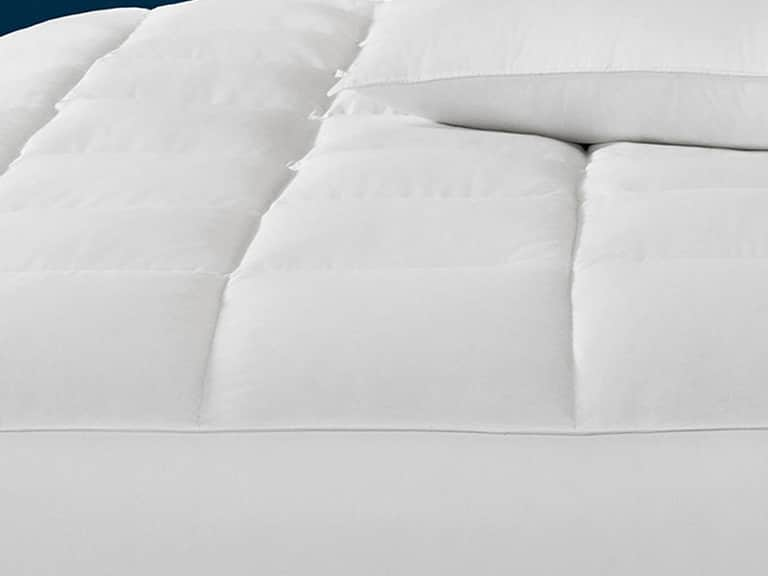
In the broader ecosystem of sleep comfort, a well-chosen mattress pad can complement a Vispring core by reinforcing loft, improving surface feel, and contributing to temperature regulation. The Monmouth Mattress Pad, featuring European white goose down with a 600+ fill power and sewn-through box construction, provides an airy, cushioned layer that maintains even loft night after night. Its elasticized sides secure it to mattresses up to 20 inches deep, ensuring a snug fit that prevents bunching. While this pad is a separate product, its design philosophy—breathable loft, stable fill distribution, and durable construction—aligns with the aims of a high-quality bed ensemble. For readers considering a Vispring foundation, pairing it with a premium mattress pad can be a thoughtful way to fine-tune comfort and longevity without compromising core materials.
Material composition, construction details, and care recommendations for the Monmouth Mattress Pad illustrate how the right accessories can extend the life and feel of a sleep system. Made in the USA from imported materials, the pad emphasizes practical care with machine washing guidance to preserve loft and resilience. While the pad’s inclusion here is informational rather than promotional, it serves as a model for how thoughtful add-ons can complement a hand-crafted mattress by enhancing temperature regulation, contouring, and overall sleep satisfaction.